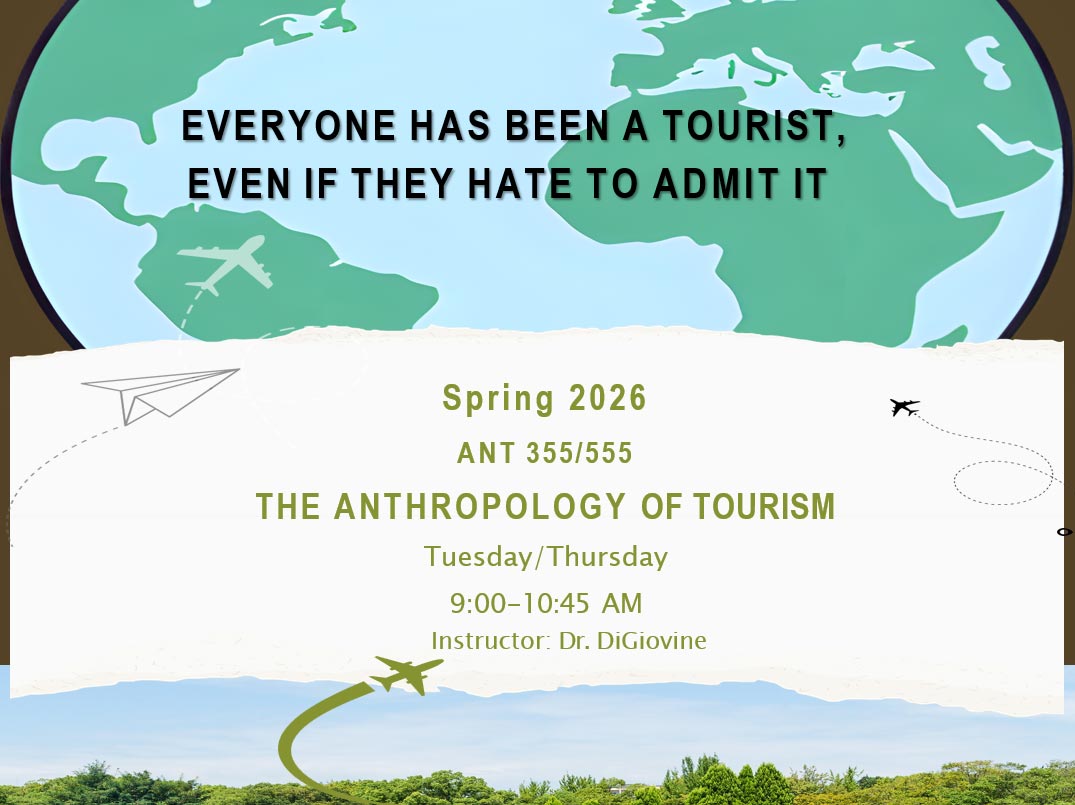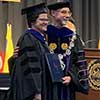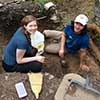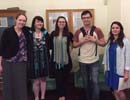
Congratulations to our Faculty Research Award recipients:

Dr. Aliza Richman - Community Engagement AWA (CE-AWA)
Dr. Jackie Zalewski - Research AWA (RAWA)
Dr. Heather Wholey - Research in Mathematics and Science (RIMS)


Anthropology and Sociology are social sciences oriented toward the systematic study of diverse peoples and groups, both sharing the desire to better understand society and culture.

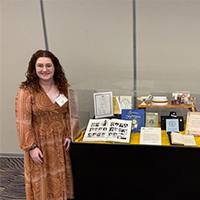
The Mission of the Department of Anthropology and Sociology is to provide broad access to the skills and special knowledge inherent in our disciplines, to nurture an awareness of and appreciation for diversity, to promote a sense of civic responsibility, global awareness, and cultural competency in our students, and to support original and collaborative scholarship by faculty and students. It will meet this mission by offering courses leading to bachelor ’s degrees in anthropology and sociology and minor programs in anthropology, sociology, museum studies and ethnic studies; a broad range of courses permitting students to satisfy the university’s general education requirements; and internships, field experiences, service learning, and international study opportunities.

Department faculty study a wide range of topics, including globalization; inequalities experienced due to gender, race, ethnicity, and social class; the social determinants of health; biocultural perspectives on food and nutrition; social movements (protests, uprisings and the like); religion in cultural and social contexts; the digital social realm; environmental sustainability and sustainable food systems; ancient societies and cultures; and heritage and preservation.

The Department of Anthropology and Sociology offers the following degrees and programs of study:

  • Anthropology, B.A.
  • Sociology, B.A.
  • Anthropology minor
  • Sociology minor
  • Museum Studies minor
  • Ethnic Studies minor

The WCU Institute for Race and Ethnic Studies has joined the Department of Anthropology and Sociology.
For more information about our degrees and programs, please, email us at ANTSOC@wcupa.edu.


Upcoming Courses: FALL 2026

Anthropology Courses

  • ANT 101 -- Introduction to Biological Anthropology
  • ANT 102 -- Introduction to Cultural Anthropology
  • ANT 103 -- Introduction to Archaeology
  • ANT 210 -- Introduction to Forensic Anthropology
  • ANT 224 -- Native People of South America
  • ANT 230 -- Introduction to Primatology
  • ANT 277 -- Sustainable Food Systems
  • ANT 348 -- Dimensions of Ethnographic Film/Video
  • ANT 349 -- Ethnographic Research Methods
  • ANT 380 -- Language and Culture
  • ANT 459-- History of Ethnological Theory
  • MST 258 -- Introduction to Museum Studies 

Learn more about Anthropology at WCU

Sociology Courses

  • SOC 100 -- Introduction to Sociology
  • SOC 240 -- Sociology of the Family
  • SOC 300 -- Sociological Theory
  • SOC 322 -- Methods of Sociological Research
  • SOC 333 -- Self and Society
  • SOC 335 -- Racial and Cultural Minorities
  • SOC 342 -- Urban Sociology 
  • SOC 343 -- Sociology of Organizations
  • SOC 361 -- Sociology of Medicine

Learn more about Sociology at WCU

Course Flyers

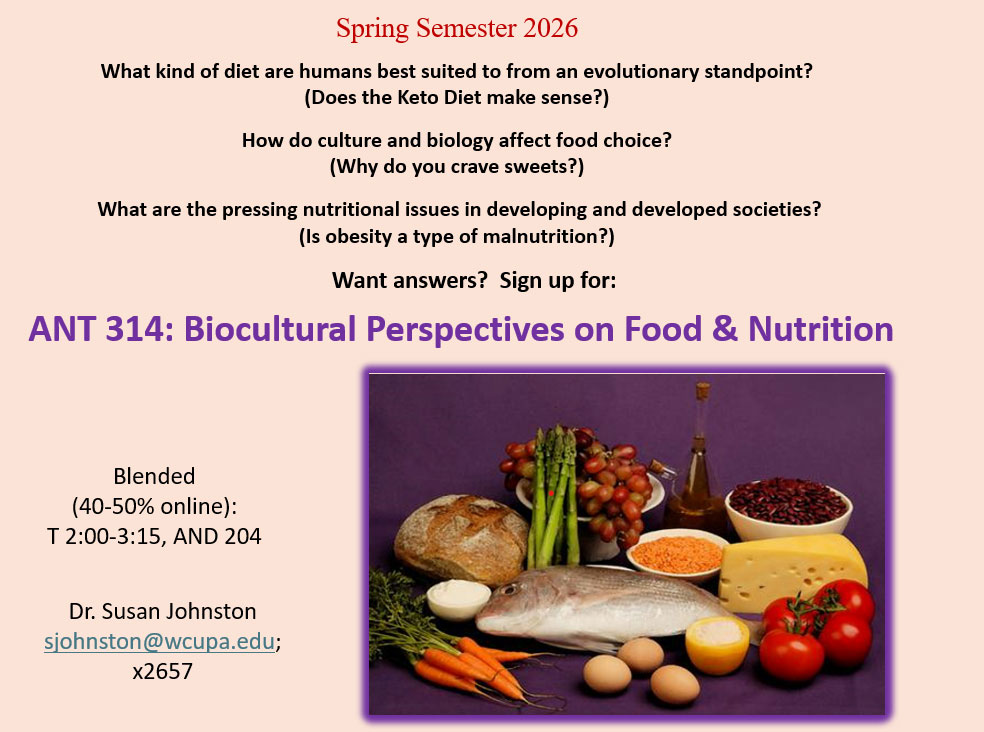
  •              Spring Semester 2026             This Photo by Unknown Author is licensed under CC BY             What kind of diet are humans best suited to from an evolutionary standpoint? (Does the Keto Diet make sense?)             How do culture and biology affect food choice? (Why do you crave sweets?)             What are the pressing nutritional issues in developing and developed societies? (Is obesity a type of malnutrition?)             Want answers? Sign up for:             ANT 314             Biocultural Perspectives on             Food & Nutrition             Blended (40-50% online): T 2-3:15, Anderson 204             Dr. Susan Johnston             sjohnston@wcupa.edu; x2657

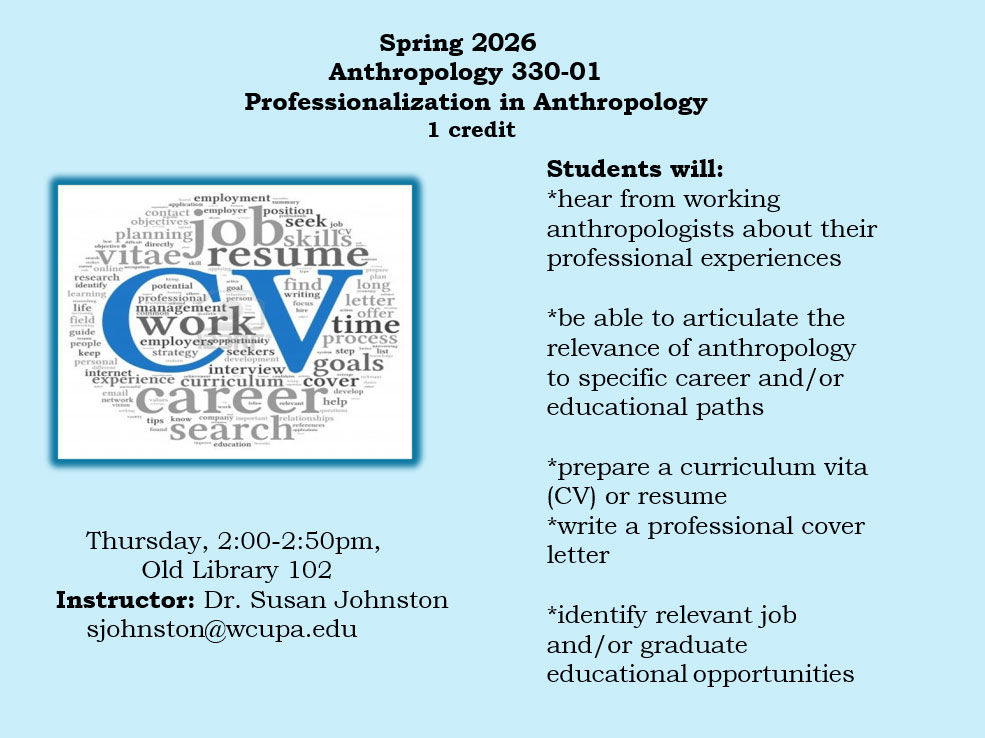
  •              Anthropology 330-01, Spring 2026 Professionalization in Anthropology             1 credit             Thursday, 2-2:50pm, Old Library 102 Instructor: Dr. Susan Johnston sjohnston@wcupa.edu             Students will:             *hear from working anthropologists about their professional experiences             *be able to articulate the relevance of anthropology to             specific career and/or educational paths             *prepare a curriculum vita (CV) or resume             *write a professional cover letter             *identify relevant job and/or graduate educational opportunities             employmentmary             application             contact employer' position             objectives             planning OD job             seek job skills             Vitae resume             identify             online             research             learning             life             field             guide             people             keep             personal             internet             email             network             goal             potential professional management-             person             work             employersopportunity strategy seekers             development interview             find             writing focus hire             prepare plan             long letter C offer             time process             step list             goals             experience curriculum cover             vision             careerhel             tips know company important relationships             found             search             education             references             develop

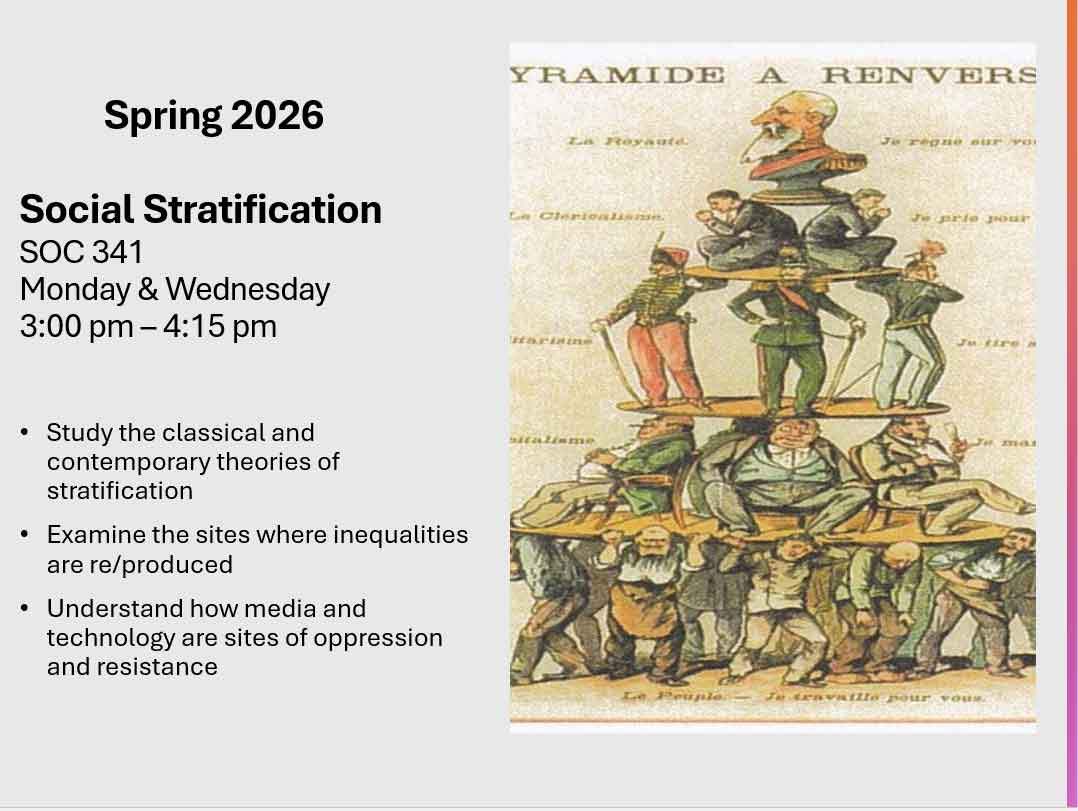
  •              YRAMIDE             A             Spring 2026             Social Stratification             SOC 341             Monday & Wednesday             3:00 pm - 4:15 pm             La Royaute             La Clericalisme.             Harime             RENVERS             Jo regne sur YO             Je prie pour             Ju tire A             Study the classical and contemporary theories of stratification             • Examine the sites where inequalities are re/produced             • Understand how media and             technology are sites of oppression and resistance             Je mar             Le Peuple. Je travaille pour vous.

  •              SPRING 2026             Register Now             SOCIOLOGY 309             SUSTAINABLE WCU & BEYOND TR 12:30-1:45PM             COURSE ATTRIBUTES:             SPEAKING EMPHASIS             SUSTAINABILITY PATHWAY ELECTIVE             COMMUNITY ENGAGEMENT PATHWAY ELECTIVE INTERDISCIPLINARY MINOR IN SUSTAINABILITY & RESILIENCE ELECTIVE             SOCIOLOGY ELECTIVE             PROJECT-BASED AND RESEARCH-DRIVEN             SUSTAINABLE ACTION             QUESTIONS? ARICHMAN@WCUPA.EDU

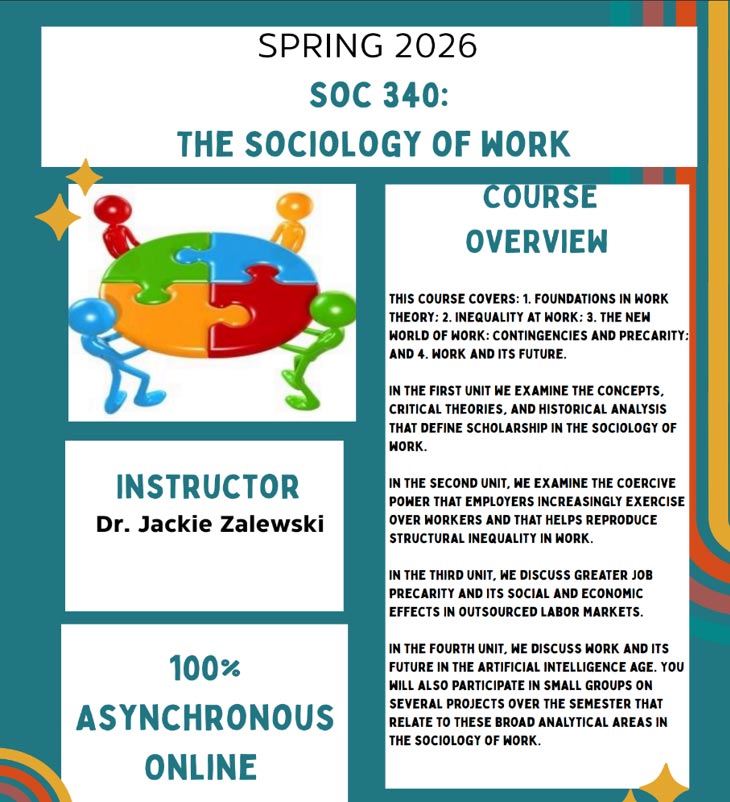
  • SPRING 2026             SOC 340:             THE SOCIOLOGY OF WORK              OVERVIEW              THIS COURSE COVERS: 1. FOUNDATIONS IN WORK             THEORY: 2. INEQUALITY AT WORK: 3. THE NEW              WORLD OF WORK: CONTINGENCIES AND PRECARITY:             AND 4. WORK AND ITS FUTURE.              IN THE FIRST UNIT WE EXAMINE THE CONCEPTS,             CRITICAL THEORIES. AND HISTORICAL ANALYSIS             THAT DEFINE SCHOLARSHIP IN THE SOCIOLOGY OF             WORK.              IN STR UCTO R IN THE SECOND UNIT, WE EXAMINE THE COERCIVE              POWER THAT EMPLOYERS INCREASINGLY EXERCISE              Dr. Jackie Zalewski OVER WORKERS AND THAT HELPS REPRODUCE             : STRUCTURAL INEQUALITY IN WORK.              IN THE THIRD UNIT, KE DISCUSS GREATER JOB N             PRECARITY AND ITS SOCIAL AND ECONOMIC             EFFECTS IN OUTSOURCED LABOR MARKETS.              IN THE FOURTH UNIT, WE DISCUSS WORK AND ITS              100% FUTURE IN THE ARTIFICIAL INTELLIGENCE AGE. YOU             WILL ALSO PARTICIPATE IN SMALL GROUPS ON              ASYNCHRONOUS [J 25 vo wee saoko auacrca aveks             THE SOCIOLOGY OF WORK.             ONLINE

  • EVERYONE HAS BE             EVEN IF THEY HAT,              Spring 2026              ANT 355/555              THE ANTHROPOLOGY OF TOURISM             Tuesday/ Thursday              9:00-10:45 AM             Instructor: Dr. DiGiovine

  • Spring 2026 - MST: 350 - Collections Care and management - Meets Tuesdays and Thursdays - 4pm-5:15pm