Current Students & Alumni Resources
Final Project Information
To graduate, all Masters students must complete a final project with the guidance of a faculty research advisor. The project, typically carried out the last semester of study, is an:
- Original scientific research project that employs the scientific method – i.e., states a geoscience issue, provides a literature review, purports a hypothesis, tests that hypothesis using collected/retrieved data, and reveals conclusions that support or reject the hypothesis.
- Educators may submit an original education research project on a geoscience-related topic (e.g., plate tectonics, meteorology). Example research ideas can be found in the Journal of Geoscience Education.
The project consists of three required elements:
PROPOSAL
1. Form a 3-faculty member graduate committee, of which: a) the faculty member directing the project (he/she also serves as the ESS 602 instructor), and b) the Graduate Coordinator serve as committee members. For educators, the Department’s Education Coordinator will direct the project (he/she also serves as the ESS 602 instructor) and will serve on the committee with the Graduate Coordinator. You are welcome to include a faculty member outside the Department.
2. Submit a project proposal form to each member of the graduate committee.
PROFESSIONAL REPORT
A 20-40 pages, double-spaced, manuscript including figures and supporting data (or 20-pages written in the form of a manuscript to be submitted to a scientific journal). Include the following sections: a) title, b) abstract, c) introduction/motivation with literature review, d) methodology/data, e) results, f) conclusions, and g) references. Report must be sent to your committee members at least 1 week before your oral presentation.
ORAL PRESENTATION (Defense)
E-mail your committee members several months in advance to coordinate a time and date for your defense. Plan on about 1 hour. * To graduate in May or December, you must successfully defend by the Friday before graduation. (For a degree conferred in August, you must defend by the Friday at the end of Summer Session III.)*
- The defense will begin with your 15- to 20-min Powerpoint presentation. Its format should parallel the report (minus the abstract).
- The next 20- to 30-min will consist of questions, comments, and discussion from the committee members
- The final 10-min will be used for the committee to render a verdict. It is a pass/fail system.
Research Presentation Example 1
Research Presentation Example 2
Rubrics for the proposal, professional report, and oral presentation can be found on the Final Project Information section (pg.8) of the M.S Geoscience Handbook
Clubs and Organizations
Sigma Gamma Epsilon (SGE) - National Geology Honor Society
- President: Luke Jackson
- Vice President: Paul Butera
- Treasurer: Kate Fredrick
- Secretary: Robert Scottoline
Sigma Gamma Epsilon (SGE) was established to recognize scholarship and professionalism in the Earth Sciences. Its objectives are the scholastic, scientific, and professional development of its members who are devoted to the advancement of the Earth Sciences. Any person who has completed at least 10 semester hours in any of our programs, and maintained a minimum of 3.0 GPA in all Earth Science courses, is qualified for membership. If you qualify and wish to join, please contact any of the above officers, or
Dr. Elliott Arnold- faculty advisor of the Zeta Beta Chapter at West Chester University. Initiation of new members is held both fall and spring semesters.
The Earth and Space Science Club (ESSC)
The Earth and Space Science Club enhances appreciation of the Earth and Space Sciences (e.g., Geology, Astronomy, Oceanography, Meteorology) through social activities, including trips to quarries, museums, and parks. Fundraising is done several times a year, including bake and t-shirt sales. ESSC is open to any student or faculty member on campus.
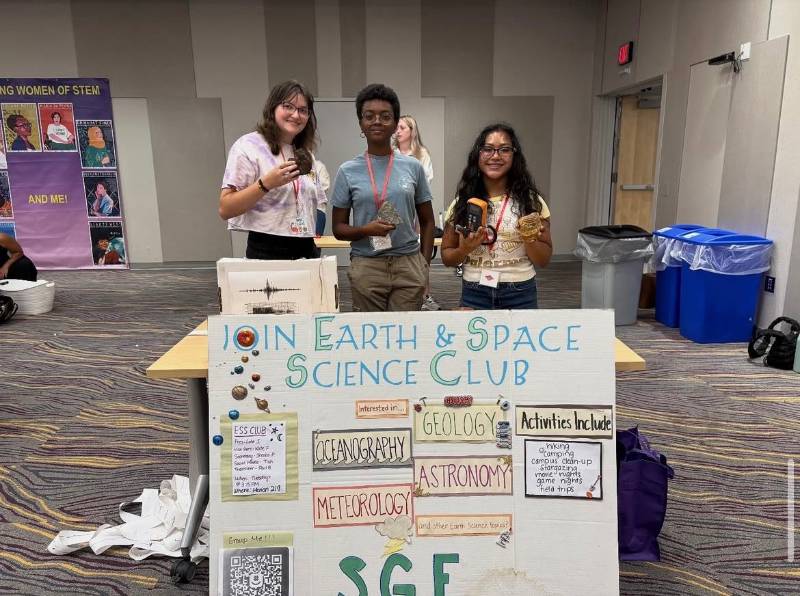
Interested students should check the Earth and Space Sciences Club RAM CONNECT website and contact
Dr. Elliott ArnoldSocial Media Account
Professional Societies
There are many professional societies in the area of Earth and Space Sciences. A sample of websites for such societies are listed below:
- Society for Women Environmental Professionals
- American Association of Petroleum Geologists
- American Geophysical Union
- National Groundwater Association
- American Institute of Professional Geologists
- Environmental and Engineering Geophysical Society
- Geological Society of America
- National Association of Black Geologists and Geophysicists
- National Association of Geoscience Teachers
- Paleontological Society
- Society of Exploration Geophysicists
- Association of Environmental and Engineering Geologists
Alumni
We are interested in keeping in touch with our past students and finding out what they are up to now. If you are an alumna/alumnus of the Department of Earth and Space Sciences (formerly the Department of Geology and Astronomy), please provide us with current contact information by filling out the short Alumni Distribution Form.
Alumni Spotlights
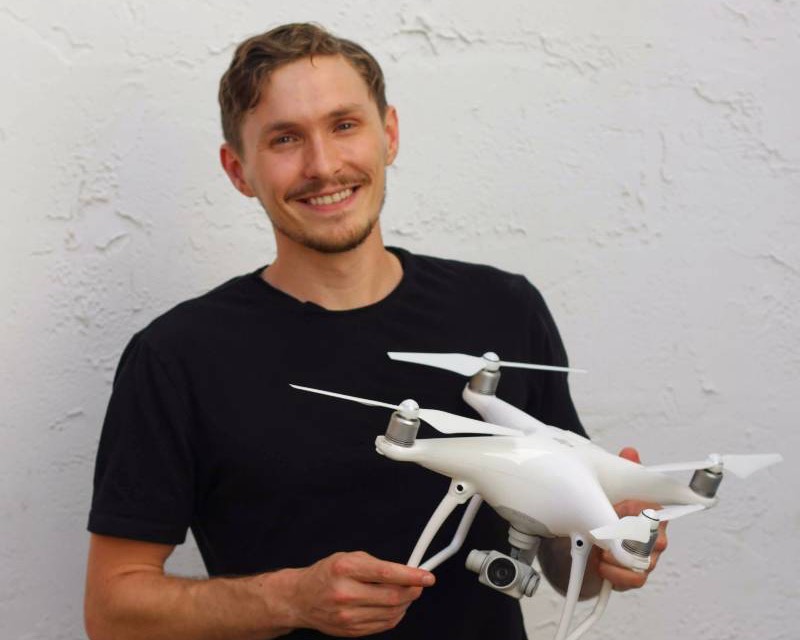
Name: Daniel Bochiocchio, Class of 2017
WCU Degree: M.S. Geoscience
Current Location: West Chester, PA
Occupation: Geoscientist-In-Training, Drone PilotThe initiative to purchase drones allowed me to pursue a new skill that has advanced my career progress three-fold. Given the resources from West Chester University Earth and Space Sciences I was given the opportunity to learn the steps of acquiring new data collection tools, learn to apply them to my field of interest, and continue to capitalize on that value by starting my own business using the skills I had learned. If not for this experience at WCU I would not have learned a new skill set, started a successful business, and moved myself to a higher position within a new company that would have required three-times the amount of time spent in a traditional career track to reach my current level.
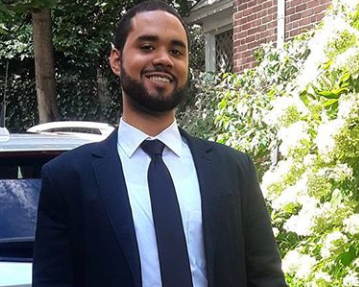
Name: Malcolm Morris
WCU Degree: B.S Geoscience: Geology Concentration 2016
Current Location: Upper Darby, PA
Occupation: Field Technician, Groundwater & Environmental Services (GES).The faculty at WCU helped me to attain my degree in a field I am passionate about. More than that, they have instilled in me life lessons and experiences which I will cherish years after my graduation. I must stress the importance of a college education, not only for facilitating your potential career, but for the advancement of your mind. With that said I wholeheartedly recommend any prospective students to consider an education with West Chester University.

Name: Krissy Sherlock
WCU Degree: B.S Geoscience: Earth Systems 2015
Current Location: Charleston, SC
Occupation: Graduate Student at College of Charleston, Graduate Assistant in the Office of Institutional Effectiveness and Strategic PlanningDuring my time in the Earth and Space Science Department I grew not only as a professional, but as a person. Not only did I gain skills and knowledge needed to advance my career, I also made a great group of friends and had the best experience. I got the opportunity to participate in cutting edge research with Dr. Joby Hilliker, while leading on the executive board of the honors earth science fraternity. Currently, I am working on my master’s degree at the College of Charleston. I plan on obtaining a master’s in both environmental studies and public administration. I am applying the knowledge and skills that I gained from the department of earth and space sciences to my thesis work focusing on meteorological hazards management.
-

Name: Sarah Sharkey
WCU Degree: M.A. Geoscience 2014
Current Location: State College, PA
Occupation: Research Assistant at Penn State UniversityThe amount of time the department dedicates to being in the field and working in teams was an invaluable experience for the start of my career. I use skills I learned from my research in the Gordon Natural area, my multi-disciplinary classes, and time spent in the GIS lab in my current position as a research assistant for the NSF Critical Zone Observatories program. I wanted a versatile degree and I feel confident my master’s education at WCU has prepared me to move from academia to industry as I navigate my career path in the field of Earth Science.
-

Name: Rebecca Schremp Flannery
WCU Degree: B.S. Earth Science/Geology 1997, Teacher Certification 2003, M.A. Geoscience 2007
Current Location: PA Department of Environmental Protection
Occupation: Geologic SpecialistWhen I started at WCU, I chose the Geology Department because I thought it would be interesting. Right away, all the students and teachers in the department made me feel welcome, like one big happy family. I currently work at the Pennsylvania Department of Environmental Protection using my degree as a Geologic Specialist. I work in the Environmental Cleanup and Brownfields section, where I use state regulations to make sure that responsible parties clean up soil and groundwater contamination to an appropriate standard.
My education at West Chester has been ongoing since I started there in 1993. I’m currently pursuing my Professional Geologist (P.G.) license since this was not available when I graduated. Throughout my years at WCU, the professors and staff have always been there to help me out, answer questions and offer support. I feel that all the classes that I took in receiving my degrees have helped me understand and be more prepared for my job.
-
Name: Jennie Matkov, B.S.
WCU Degree: B.S. Geoscience Geology, Anthropology Minor, 2009
Current Location: West Chester, PA
Occupation: Research Assistant, Stroud Water Research Center, Avondale, PA"The incredible field experiences and warm community of the West Chester University department of Geology and Astronomy facilitated such a wonderful learning environment. Not only did I learn the technical intricacies of the geoscience field, but most importantly I was taught how to continually apply this knowledge in creative ways to ask more questions and to solve multidisciplinary problems. The amazing faculty in this department created in me an ability to build my career within the context of who I am and where I want to go."
-
Name: Russell Losco, B.A., M.A., PG, CPSS
WCU Degree: M.A. Geoscience, 2009
Current Location: West Grove, PA
Occupation: Principal Geologist & Soil Scientist, Lanchester Soil Consultants, IncCompleting a master’s degree in geoscience at West Chester University opened countless opportunities for me. In addition to allowing me to become licensed as a Professional Geologist, I am now an adjunct professor, a published author with several peer-reviewed publications, and am active on a national scale in research and in professional organizations. The geographical range and scope of my work has increased dramatically based upon the knowledge and experience that I gained through West Chester.
-
Name: Maureen Moore, class of 2007
WCU Degree: B.S. Geology & B.S.E.D. Earth & Space Science Secondary Education (dual degree)
Occupation: Geologist, Newmont Mining CorporationWhile attending West Chester University, I got the opportunity to be a part of the Geology & Astronomy Department. The well-rounded education I received from West Chester University has set me up to use my degree in a variety of disciplines within the field of Geology and Earth Sciences. Prior to pursing a graduate degree in Economic Geology and Ore Deposits, I had the opportunity to work for an environmental consulting firm directly supporting DuPont. I am currently working as a geologist in the emerging talent program at Newmont Mining Corporation in Denver, Colorado. The emerging talent program allows students coming out of graduate school to get exposed to the different geologic disciplines within the mining industry. My current focus within the program is precious and base metal mineral exploration. Without the solid geologic foundation I received from WCU, I would not have the opportunities I have.
-
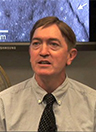
Name: Dr. Tom Watters
WCU Degree: B.S. Earth Sciences, 1977
Current Location: Smithsonian Institution, National Air and Space Museum
Occupation: Senior Scientist and Chair, Center for Earth and Planetary StudiesMy time at West Chester University set me on a path to become a planetary scientist. George Reed, Sy Greenberg, and the others were more than my teachers; they were my mentors and my friends. What success I’ve achieved as a scientist, I owe in large measure to them.
-
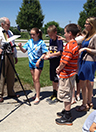
Name: Dr. Laura Mazzagatti
WCU Degree: M.S. Geoscience
Current Location: West Chester, PA
Occupation: Secondary Education Science TeacherIn obtaining my Masters from WCU, I have been able to combine my passion for both science and children as a Secondary Education Teacher. I have been pleasantly surprised by how rewarding and fulfilling this profession is and I enjoy brightening the minds of students with Astronomy, Geology, Meteorology, Physical Science and Environmental Science. I have WCU to thank for their incredible graduate program and talented professors.