
Barbie Beyond the U.S.: Dr. Emily Aguiló-Pérez’s Research Around the Icon Leads to Global Conversations
 With the U.S. Postal Service’s May 1 announcement of a new set of forever stamps coming
out July 11 featuring the iconic Barbie doll dressed to represent 10 careers, it’s
evident Barbie has never gone out of style.
With the U.S. Postal Service’s May 1 announcement of a new set of forever stamps coming
out July 11 featuring the iconic Barbie doll dressed to represent 10 careers, it’s
evident Barbie has never gone out of style.
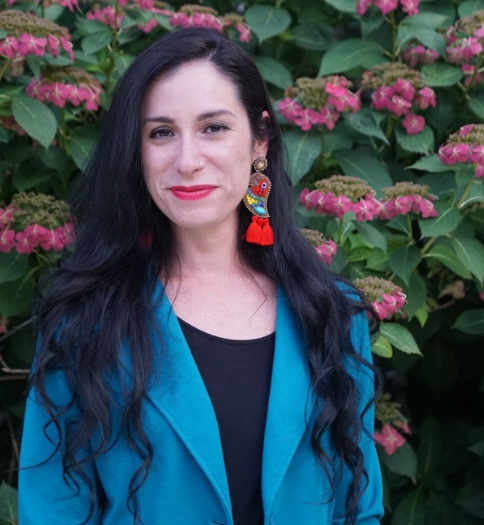
“As a child, Barbie was the toy I spent hours playing with by myself,” notes Dr. Emily Aguiló-Pérez, WCU professor of English. Dr. Aguiló-Pérez, who holds a doctorate in curriculum and instruction and another in children’s literature and culture, has dedicated more than seven years of instruction and scholarly research to examining children’s literature and girlhood studies through a Latinx lens. Her research traces how Barbie arrived in different regions at different moments, shaped by politics, economics, and local culture.
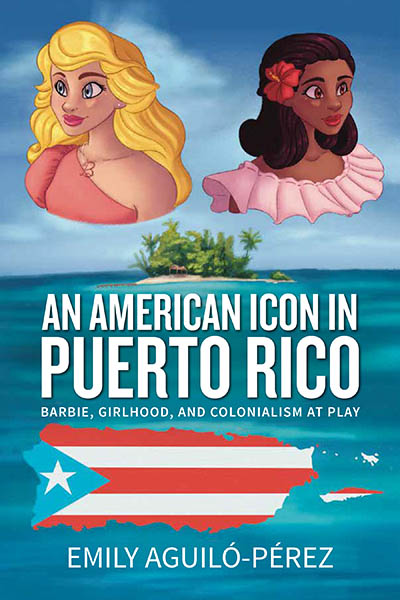
“Barbie is a global brand. But not everyone has experienced the doll in the same way,” she continues, adding that, as she completed her doctoral studies, the doll took on new significance. “I started thinking about my identity as a Puerto Rican woman. I found hardly anything about Barbie in Puerto Rico in my research.” That angle became her dissertation, and then her first book, An American Icon in Puerto Rico: Barbie, Girlhood, and Colonialism at Play.
Her work on Barbie’s cultural impact has expanded well beyond the classroom — earning national recognition, international speaking invitations, and the 2025 Mary Valentine and Andrew Cosman Research Fellowship from the Strong National Museum of Play. The fellowship supported her research and new international projects, like her collaborative work examining Barbie in Latin America, including a forthcoming journal issue that highlights the doll’s cultural impact beyond the United States.
Most recently, Dr. Aguiló-Pérez was invited by The Great Courses to write and develop an Audible-exclusive, six-episode original series titled The Life of Barbie. She wrote the scripts and recorded the series in April. It will be available June 18.
She also recently co-edited two volumes published by Palgrave Macmillan: Barbie in the Media: The Transmedia Presence of Mattel’s Celebrity Doll and #Barbie and Social Media: Digital Discourses and Mattel’s Celebrity Doll. The books bring together scholars from around the world, examining how Barbie shapes conversations around gender, race, identity, and popular culture across media platforms.
At the heart of Dr. Aguiló-Pérez’s work is a commitment to taking popular culture seriously as a site of meaning-making, a mirror held up to reflect cultural issues, and a vehicle for change.
 “Some people see pop culture as not worthy of exploring but if there’s something we
interact with nearly every day, whether we like it or not, it’s popular culture. Examining
that thing is a way to understand its audience and society. What are people valuing?
How are they responding to it? Is it positive or negative, and when do those reactions
shift?”
“Some people see pop culture as not worthy of exploring but if there’s something we
interact with nearly every day, whether we like it or not, it’s popular culture. Examining
that thing is a way to understand its audience and society. What are people valuing?
How are they responding to it? Is it positive or negative, and when do those reactions
shift?”
Barbie’s longevity lends to her usefulness in examining the current cultural moment. Since her debut in 1959, the doll has reflected changing and contested ideas about girlhood. Dr. Aguiló-Pérez points to moments like the controversy surrounding the 1992 Teen Talk Barbie, which included the phrase “Math is hard,” as evidence of how the doll exposed broader anxieties about gender and opportunity at the time. Protests eventually prompted Mattel to remove the phrase.
Using Barbie as a lens for gender analysis effectively turns her into a cultural archive. Reexamining the 1992 controversy now reveals societal anxieties surrounding women in STEM and broader gaps in public awareness at the time.
Today, Dr. Aguiló-Pérez’s research increasingly emphasizes Barbie’s global reach. In the past year alone, she has been invited to present talks and lead workshops at institutions including Jagiellonian University in Poland, the University of Alicante in Spain, the University of Puerto Rico at Mayagüez, and Old Dominion University’s Barry Art Museum.
Dr. Aguiló-Pérez’s projects mark a significant new chapter in her work. As her research continues to cross borders, so too does its impact, demonstrating how a single cultural icon can open conversations that resonate around the world.