WCU’s Action Plan Takes Shape at President Bernotsky’s Fall Address
One year after introducing a 3-D approach to strategic planning, the president shared the initiatives moving forward and the next steps for the campus community.
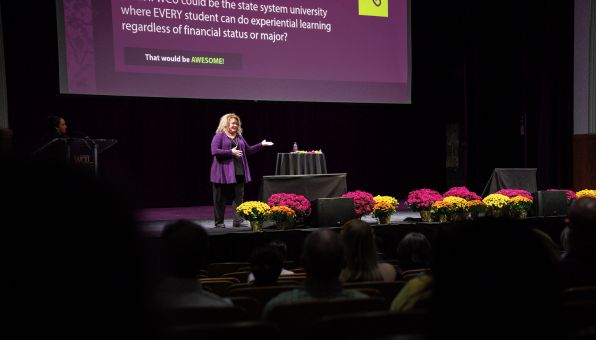
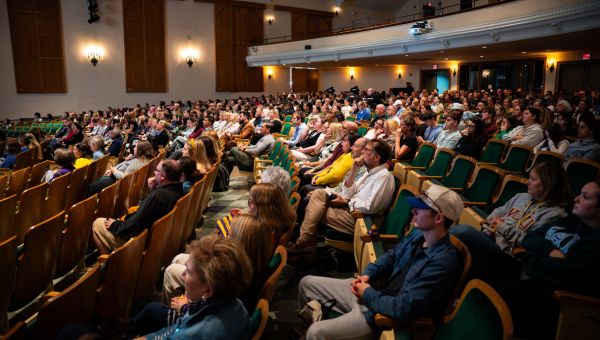
When West Chester University President Dr. Laurie Bernotsky delivered her Fall Address on October 15, she had a simple way to measure how far the University has come in 12 months.
“A year ago we were talking about an idea, and today here we are,” she told faculty, staff, and students gathered in Emilie K. Asplundh Concert Hall. “We’re really just at the beginning. We've made all this progress but there's still so much ahead of us and that's just fabulous.”
The Action Plan grew out of the listening tour Dr. Bernotsky launched in Fall 2024 and took shape through a collaborative process involving the campus community starting in 2025.
Faculty, staff, and students submitted 167 proposals last spring. In May, more than 200 campus community members gathered for the first Action Plan Days to review and rate the ideas. Over the summer, WCU’s deans and the president’s cabinet determined which could move forward this year and which needed more time.
Dr. Bernotsky revisited the three drivers guiding WCU’s move from “almost awesome” to awesome: Be Better, Think Bigger, and Foster Moments. They are not initiatives, she said, but a way of approaching the work the University already does.
Being better can mean doing less, even stopping things that no longer make sense. Thinking bigger means looking both upstream and downstream.
“If you're solving the same issue, putting out the same fire for the 100th time, maybe think about why is this fire even starting,” she said.
Downstream thinking, by contrast, considers how decisions affect others, like a Friday-night email that upends everyone’s weekend.
Alumni consistently praise WCU for fostering moments. Doing that well means creating the conditions for meaningful moments to happen, then recognizing and celebrating them.
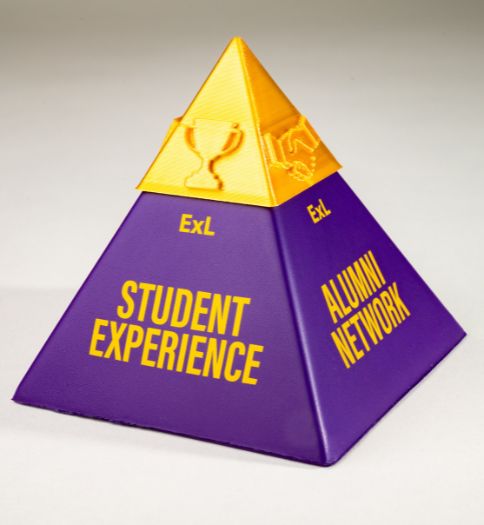
Dr. Bernotsky also unveiled version 2.0 of the 3-D pyramid model she introduced last year. Its four faces represent the University’s strategic priorities: Student Experience, Teaching & Learning, Alumni Network, and Stewards of Place. Four connectors at the pyramid’s base corners show where adjacent priorities meet: Student Success Outcomes, R2, Arts & Athletics Ambassadors, and Sustainability.
At the top is experiential learning, the connector that ties all priorities together. Attendees received small yellow capstones to place on the top of the purple pyramid models as a reminder of the central role experiential learning plays. An interactive version on the Action Plan website lets visitors explore each face and connector.
Experiential learning was a leading theme of the listening tour. It also accounted for 14 percent of Action Plan submissions, the largest share of any theme. Dr. Bernotsky repeated the question she asked last year: What if WCU could be the state system university where every student can do experiential learning, regardless of major or financial status?
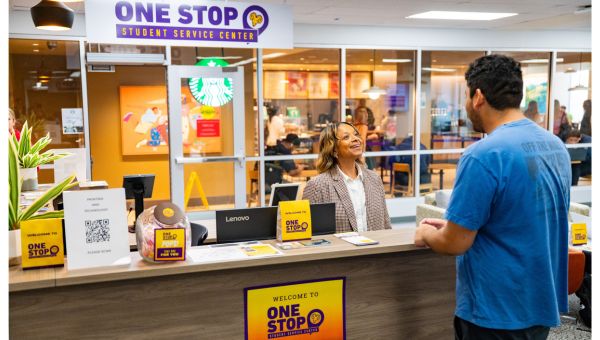
She pointed to early examples of the Action Plan at work. The One Stop Student Service Center opened at the start of the semester and has already welcomed more than 500 students. And WCU’s marching band was invited to the Bands of America Grand National Championships, which will put the University in front of thousands of high school students.
The University will assess progress on this year’s initiatives and consider what should be slated for year two at Action Plan Days in the spring. Following refinement over the summer, year two of the plan will be shared in Fall 2027. Dr. Bernotsky said getting to awesome isn’t something one person can lead. The campus has to accomplish it together, she said.
The 2026-27 Action Plan Spotlights report features a selection of initiatives now underway. Explore more, including a full list of the 2026-27 initiatives, at https://www.wcupa.edu/actionplan.